

 My basket
How can
reduce the chlorine
in your pool?
Like most pool owners, you use chlorine for water treatment. Appreciated for its disinfectant properties, this product prevents the proliferation of bacteria, algae and fungi. In other words, it prevents pool water from rotting. Its ease of use and affordable price make chlorine a predominant choice forpool maintenance. However, its use to treat water has its drawbacks. In overdose, this product can irritate the eyes, skin and respiratory tract. Not to mention the unpleasant odor you have to put up with while swimming. How can you reduce the amount of chlorine in your pool?
Discover La Dauphine, an LM Innovation technology, to treat your water more naturally and over time.
The disadvantages of chlorine in a swimming pool
Just as it's important to check that your pool water is healthy enough to swim in, it's also necessary to ensure that it doesn't contain too much chlorine.
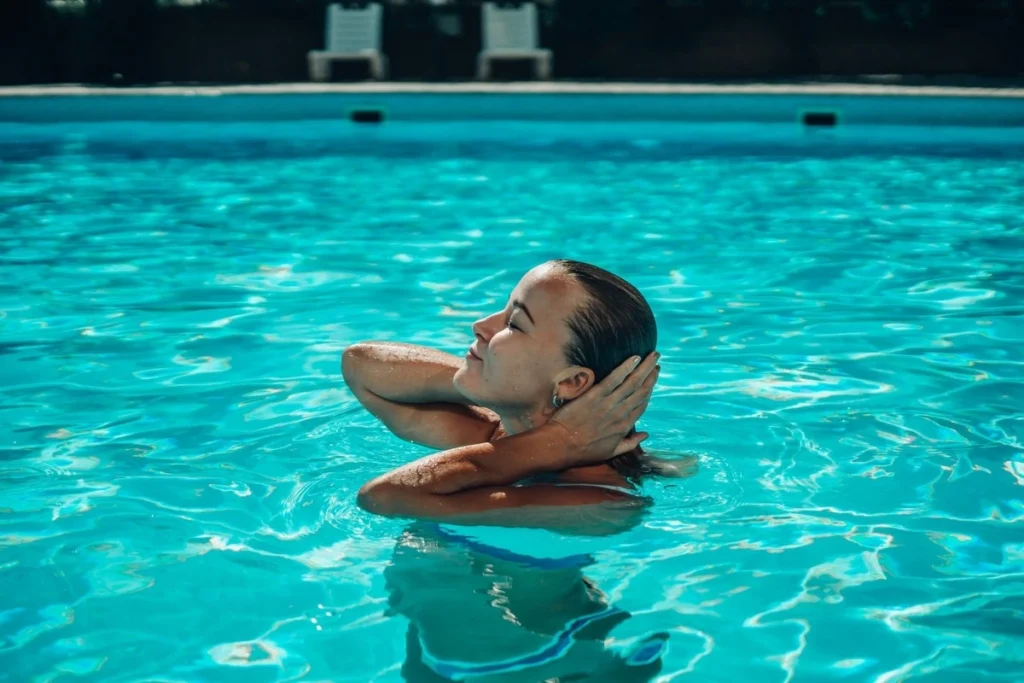
Effects of chlorine overdose
For safe swimming, the chlorine level in a private pool should be between 1 and 2 ppm. 1 ppm corresponds to 1 mg of chlorine per liter of water. This quantity ensures both good disinfection and pleasant bathing.
When the chlorine level in your pool exceeds this range, the consequences are many: dry skin, tightness, itching, the appearance of red patches, irritated eyes... If you have a wound, the effects of chlorine on the epidermis are even greater.
Even without overdosing, prolonged contact with chlorine also affects the condition of your hair. Like salt in seawater, it dries hair out, weakens it and discolors it.
Those responsible for chlorine odour: chloramines
Swimming pool water contains organic matter from bathers (sweat, hair, cosmetics, etc.). In the form of hypochlorous acid, the chlorine dissolved in the water reacts with these substances, particularly ammonia. This reaction produces chloramines.
These chemical compounds give your pool a strong chlorine odor. Their presence in small quantities has no harmful effect on occasional swimmers. However, in large quantities, they can have more serious consequences: irritation of the eyes, throat, skin and nostrils, or even allergies. For professionals, such as lifeguards and maintenance staff, exposure to chloramines is included in the list of occupational diseases.
How can you reduce chlorine in your pool over the long term?
The Dauphine is a water treatment system created by LM Innovation. This device is based on the use of a vortex coupled with silica. Our solution uses no chemicals, energy or consumables. It is installed on your general water supply and acts on the water before filling your pool. Through natural action, La Dauphine optimizes the water's natural properties. This improved quality means LM water can be stored longer without rotting.
In your pool, chlorine is used to eliminate bacteria, algae and fungi. By being more efficient, LM water enhances these effects. So, by combining the use of La Dauphine with chlorine to treat your water, you can greatly reduce the amount of product needed on a daily basis.
LM water lets you kill two birds with one stone: reduce the effect of chlorine when you swim, and cut pool maintenance costs.
How can you reduce the chlorine level in your pool in the short term?
You can't wait to jump into your pool, but after a test you find that the chlorine level is too high? Start by removing all sources of chlorine (pebbles or salt chlorinators).
To reduce chlorine levels quickly, you can use chemicals such as sodium thiosulfate. However, if you prefer a more natural method, you can dilute the chlorine in your pool. All you need to do is renew some of the water in your pool.
Finally, there's one last method. It requires a little patience, however, as it relies on the effects of the sun. If you use chlorine, you must also use stabilizer to counteract the impact of UV rays. To reduce chlorine levels, remove the stabilizer for a while, uncover your pool and let the sun do its work.